Proliferative Vitreoretinopathy Exhibiting Metaplastic Pseudovascular Morphology.
Kim … Stagner
Ophthalmol Retina·Mar 27, 2026
Abstract not available — see full article for details.
View full article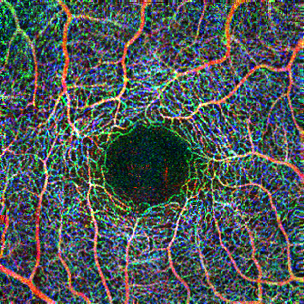
Weekly curated literature from top retina and ophthalmology journals
RRD, TRD, giant tears, PVR, ocular trauma, macular hole, ERM
Abstract not available — see full article for details.
View full articleAbstract not available — see full article for details.
View full articleAbstract not available — see full article for details.
View full articleAbstract not available — see full article for details.
View full articleAbstract not available — see full article for details.
View full articleAbstract not available — see full article for details.
View full articleDiabetic retinopathy surgery, DME treatment, tractional complications
Macular OCTA-derived geometric perfusion deficits in the deep capillary plexus (GPDd) are a robust biomarker for retinal nonperfusion across all retinal regions in diabetic eyes, while foveal avascular zone (FAZ) enlargement indicates only posterior ischemia.
View full articleIn DME, fluocinolone acetonide (FAc) as baseline therapy achieved similar visual and anatomical outcomes to aflibercept but required significantly fewer total injections over 18 months, despite a higher incidence of cataracts and increased intraocular pressure.
View full articleCombining intravitreal dexamethasone implant with navigated subthreshold micropulse yellow laser significantly improved visual acuity and reduced central subfield thickness, while extending the retreatment-free interval for diabetic macular edema patients over 12 months compared to dexamethasone monotherapy.
View full articleNeovascular AMD, geographic atrophy, submacular hemorrhage
Centenarian patients with neovascular AMD can maintain vision with long-term anti-VEGF therapy, underscoring the need for tailored management strategies.
View full articleDespite anti-VEGF transforming nAMD therapy, visual acuity gains have plateaued; future progress should prioritize meaningful visual function improvements over solely achieving a dry retina or extending dosing intervals.
View full articleHyperreflective foci contiguous with the RPE (rpeHRF) are associated with worsening visual function across the spectrum of aging, early, and intermediate AMD, with their burden increasing alongside disease severity.
View full articleIRDs, gene therapy, retinitis pigmentosa, LCA, Stargardt
Retinal abnormalities, particularly pigmentary changes and RPE/ellipsoid zone disruption, are the most common ophthalmic manifestations of Danon disease and can prompt earlier diagnosis of this life-threatening systemic disorder.
View full articlePosterior uveitis, panuveitis, chorioretinitis, CMV retinitis, ocular inflammation
Abstract not available — see full article for details.
View full articleThis multigenerational case series highlights familial granulomatous uveitis suggestive of Blau syndrome in India, emphasizing the importance of early diagnosis and immunomodulatory therapy to prevent irreversible visual morbidity, particularly in the absence of genetic testing.
View full articleIn pediatric presumed trematode-induced granulomatous intermediate uveitis (PTIGIU), lower presenting visual acuity and higher vitreous inflammation predict medical treatment failure and better response to early surgical intervention.
View full articleUveal melanoma, retinoblastoma, choroidal tumors, ocular metastases
Abstract not available — see full article for details.
View full articleEndophthalmitis, surgical complications, drug safety, adverse events
Nearly half of phakic patients (46%) undergoing pars plana vitrectomy required cataract surgery within 2 years, with older age, baseline cataract, and vitrectomy for retinal detachment, macular hole, or epiretinal membrane significantly increasing this risk.
View full articleAmong patients receiving intravitreal anti-VEGF therapy who experience stroke or myocardial infarction (MI), continuing injections peri-event was not associated with increased mortality or major functional morbidity and may even be associated with improved short-term outcomes.
View full articleAbstract not available — see full article for details.
View full articlePost-injection endophthalmitis after a first anti-VEGF injection is rare (0.059%), typically presenting within 3-8 days, with prior intravitreal corticosteroid use and residence in U.S. territories identified as risk factors.
View full article